Bench-grade access in flight found a fault that had never reproduced on the ground. Keeping that capture rather than discarding it is what, years later, made it possible to warn before failures instead of reporting them.
Sector: UAV manufacturer, flight test and fleet operations
The constraint
The first problem was immediate. An intermittent fault appeared roughly once in every 10 to 12 flights and never on the bench. Conventional telemetry gave the team a filtered summary at a fixed rate — enough to know something had happened, never enough to know what. Each attempt cost a sortie, a crew and a turnaround, and the programme was holding a delivery date.
The second problem arrived later, once the aircraft were in service. Unscheduled failures drove both downtime and cost, and calendar-based maintenance was the only tool available — which meant replacing components that were fine while occasionally missing ones that were not. Fleet-average thresholds had been tried and produced too many false alarms to be trusted. Airframes differ, and a threshold loose enough to avoid nuisance alerts was too loose to catch anything useful.
What we did
For the fault, we extended the vehicle's internal buses to the ground station over the radio link. The subsystem under suspicion became addressable in flight exactly as it is on the bench: the engineers used their existing tools, against the real hardware, while it was flying. Rather than waiting for the fault, they instrumented for it — raising capture rate on the registers of interest and querying the device directly the moment the symptom appeared.
The decision that mattered most was made almost in passing: keep everything. Full-rate capture was archived per airframe rather than discarded at the end of each sortie, on the argument that storage is cheap and a flight cannot be flown again.
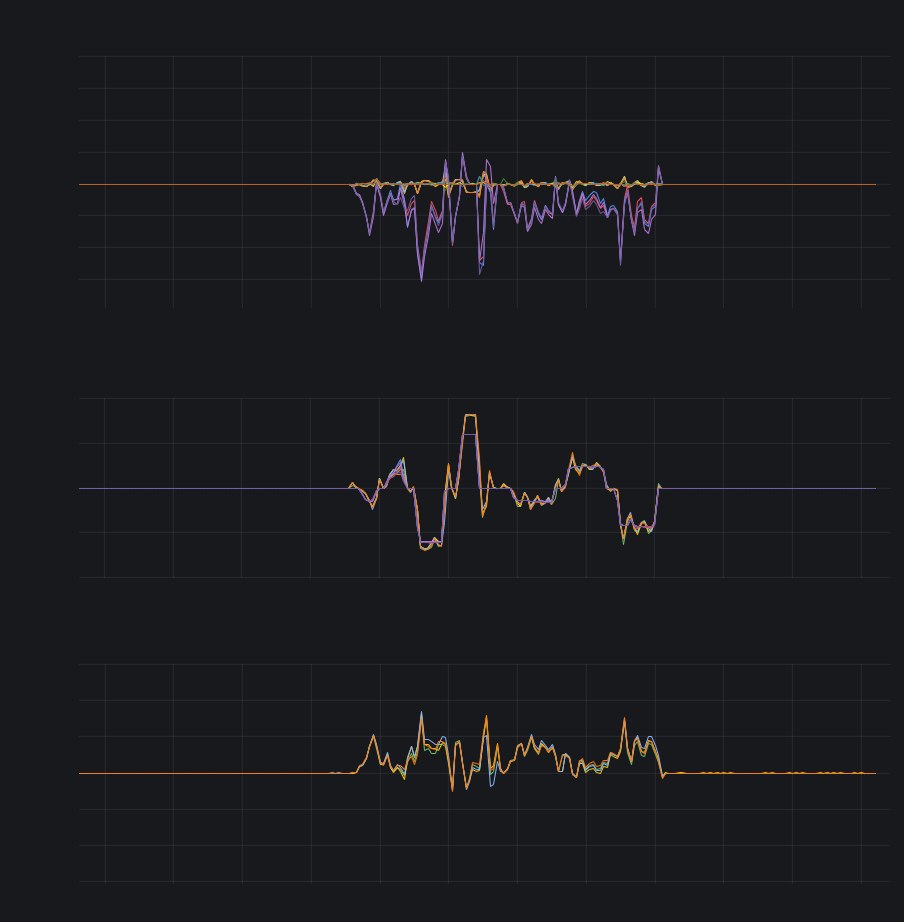
Four years of that archive is what made the second problem tractable. With a per-airframe history long enough to contain both normal operation and the run-up to real failures, we could model normal behaviour for each individual unit rather than for the fleet. Motor current signatures, vibration spectra, thermal behaviour and cell impedance each have a characteristic shape per airframe, and what matters is departure from that airframe's own baseline. Baselines adapt slowly, so genuine wear is tracked without masking a sudden change, and alerts name the component rather than the aircraft — a warning a maintainer cannot act on is one they learn to ignore.