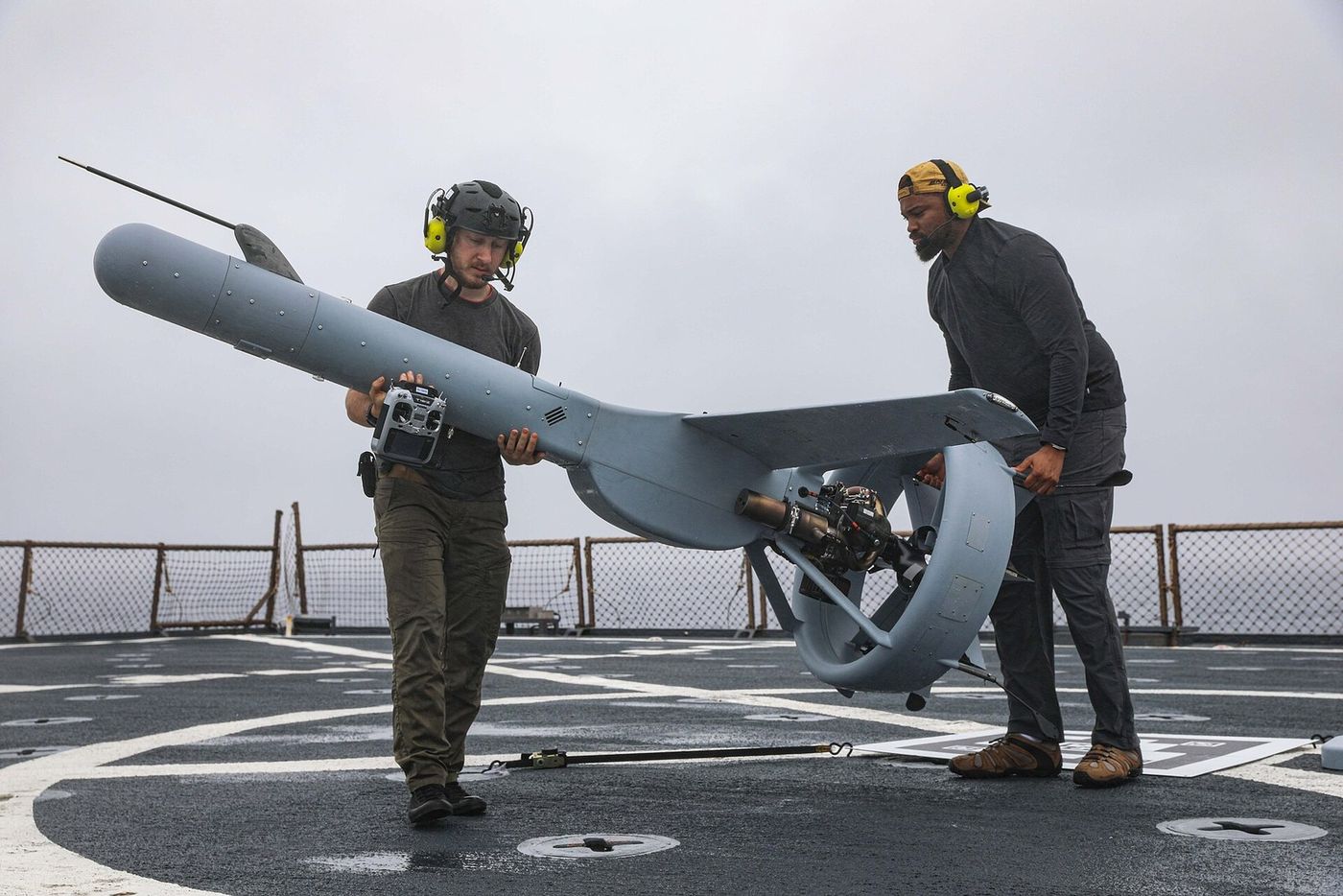
A stock flight controller lost authority during exactly the manoeuvres the aircraft existed to perform. We identified the airframe, established what its structure could actually take, rebuilt the control laws around both, and released the envelope the design had always implied.
Sector: Industrial UAV manufacturer
The constraint
The customer had an airframe whose commercial case depended on rapid attitude changes and aggressive transitions. The autopilot was capable hardware running well-proven firmware — but its control laws were tuned, reasonably, for the general case. At the edge of the intended envelope the aircraft became sluggish, then briefly unpredictable, and the test team had stopped going there.
Replacing the autopilot was not an option: the certification work and the supply chain were both already committed.
What we did
We began by measuring rather than tuning. A system identification campaign characterised the actual airframe — inertia, actuator bandwidth, aerodynamic behaviour through the transitions — instead of relying on the CAD-derived model, which turned out to be optimistic about rotor response under load.
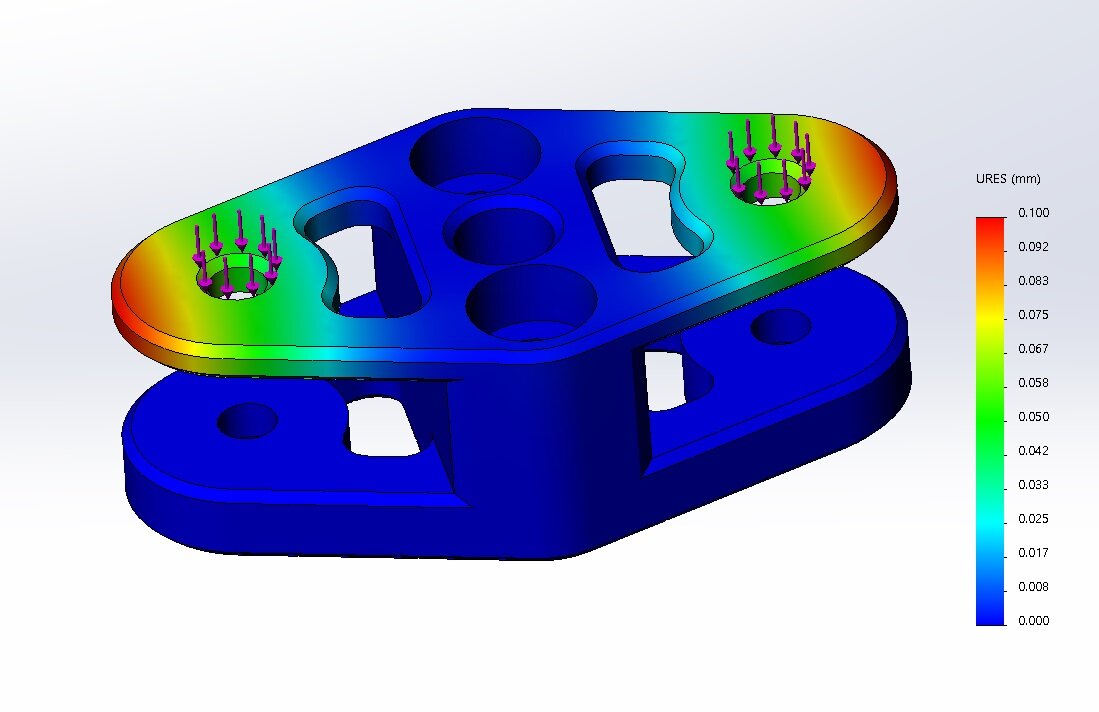
Before any of this reached the aircraft we established what the structure could take. Expanding an envelope in software is only safe if the airframe underneath it has the margin: control laws that command higher attitude rates drive loads through arms, mounts and fasteners that the original design was never asked to carry, and the controller has no way of knowing that.
We ran finite-element analysis on the load paths at the rates and attitudes the new laws would command, then verified the critical joints on the bench against the predicted loads. Two areas came back with less margin than the intended envelope implied. The envelope we eventually released was bounded by those numbers rather than by what the controller could achieve — software was not permitted to ask for anything the structure had not been shown to survive.
With a validated model we rebuilt the attitude and rate loops, scheduling gains across the flight envelope so authority stayed consistent where the fixed-gain implementation had been losing it. Actuator saturation was handled explicitly, with defined recovery, rather than being allowed to wind up the integrators.
All of it was validated in simulation against the identified model before flight, then in a staged flight campaign that expanded the envelope in controlled increments with an abort condition defined for each step.