Autonomy and onboard AI

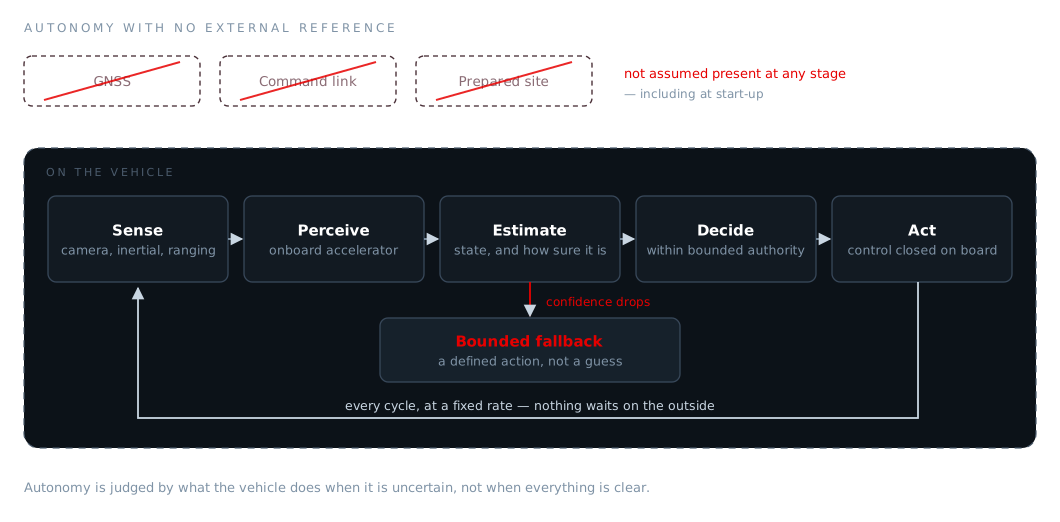
Autonomy that depends on a radio link, a satellite constellation or a ground station is not autonomy. We build vehicles that keep making correct decisions when every external reference is gone.

Show the compute doing work on the aircraft, not a generic AI stock image.

Decisions made onboard

Inference at the edge is not a fashion. It is the only way to keep a control loop closed when the link drops, and the only way to keep latency inside a budget that a fast-moving airframe can tolerate. Sending frames to a ground station and waiting for an answer is a design that works in a demonstration and fails in service.

We build perception and decision pipelines that run entirely on the vehicle, sized to the thermal and power envelope the airframe actually has rather than the one a development kit implies.

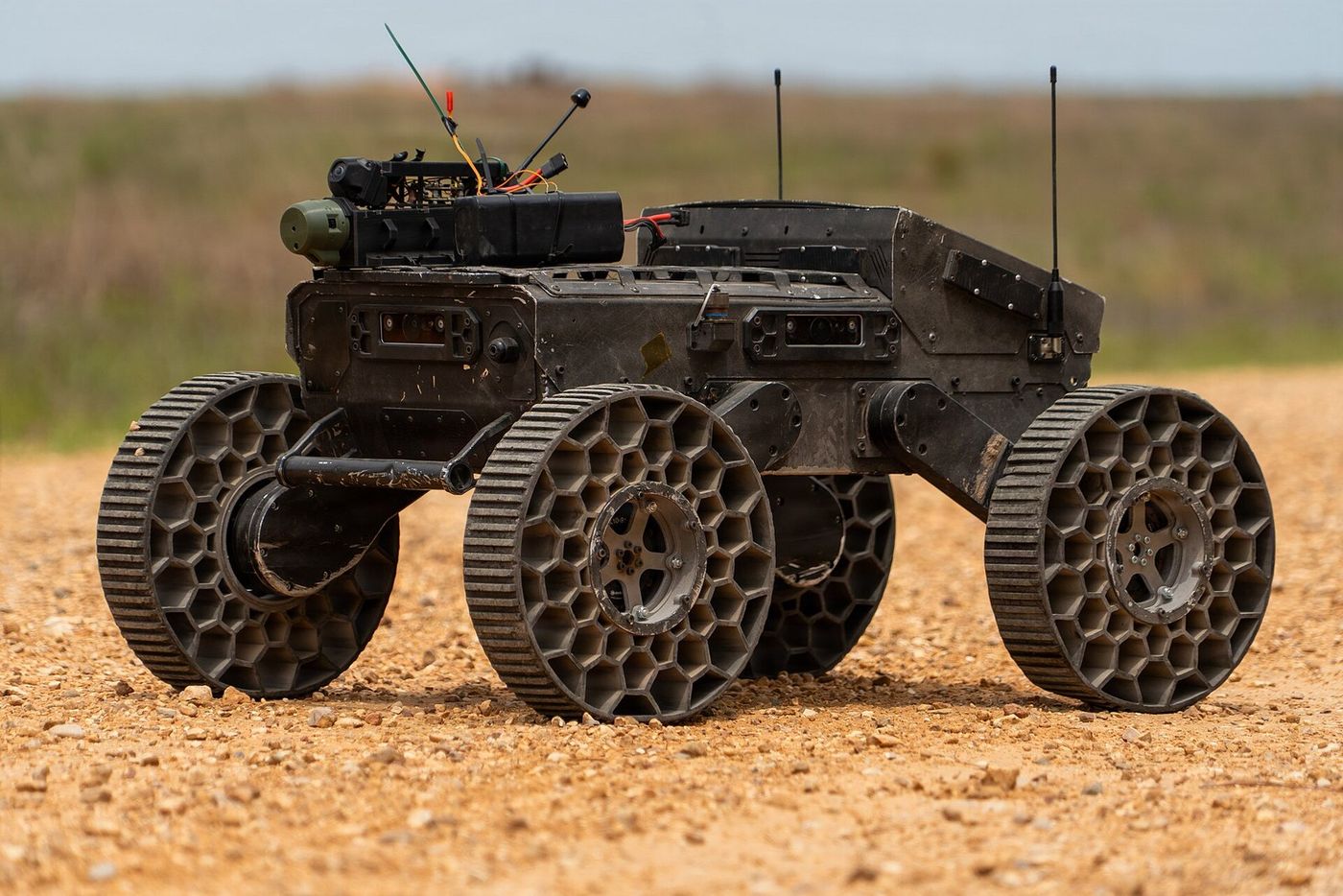
A six-wheeled unmanned ground vehicle on open ground, away from any prepared surface.

What we build

  • Reference-free autonomous navigation — vehicles that localise and navigate with no GNSS, no beacons and no prepared environment, using onboard processing alone.
  • Flight control optimisation for manoeuvres outside the envelope stock controllers are tuned for, including aggressive attitude changes and rapid transitions where standard gains lose authority.
  • Perception pipelines on embedded accelerators, from detection and tracking to obstacle avoidance and terrain assessment, built against the constraints of the platform.
  • Bounded autonomy — explicit limits on what the vehicle may decide alone, with defined escalation and a deterministic fallback when confidence drops below threshold.

Robustness over benchmark scores

A model that scores well on a curated dataset and a model that behaves safely at dusk, in rain, over water, against a low sun, are different artefacts. We validate against the conditions the system will meet, and we care more about the behaviour at low confidence than the accuracy at high confidence — because the first is what determines whether the aircraft comes home.

What you get

  • Autonomy that survives loss of link, GNSS and ground infrastructure
  • Latency and power inside the airframe's real budget, not a kit's
  • Defined, testable behaviour when the system is uncertain

Related work

Talk to us about your system

The most useful first message describes the constraint you cannot get past.

Start a conversation