Resilient navigation and positioning

Centimetre accuracy is straightforward with a clear sky and a cooperative environment. We build the positioning systems that hold up when neither is available.
Positioning hardware is invisible in normal photos — show the antenna, which is the part people recognise.

Positioning that degrades gracefully

Satellite navigation is the easiest thing in the world to remove from an aircraft. Jamming is cheap, spoofing is no longer exotic, and neither is needed for GNSS to become useless — an urban canyon, a tunnel portal, a metal structure or a hangar roof will do it.

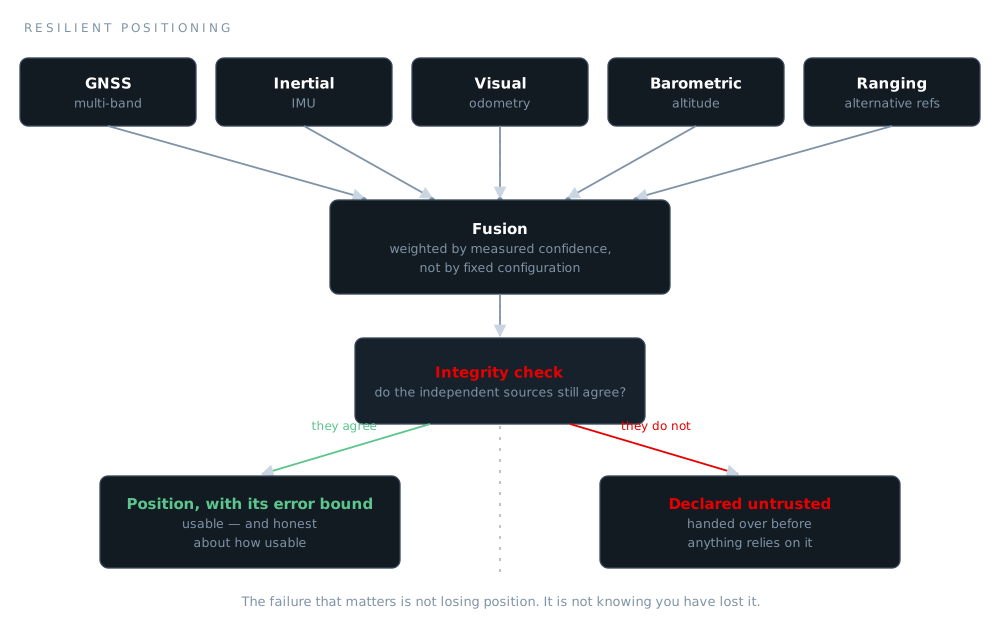
The failure mode that matters is not losing position. It is not knowing you have lost it. We design positioning systems whose accuracy degrades in a way the vehicle can observe, report and act on, rather than ones that fail confidently.

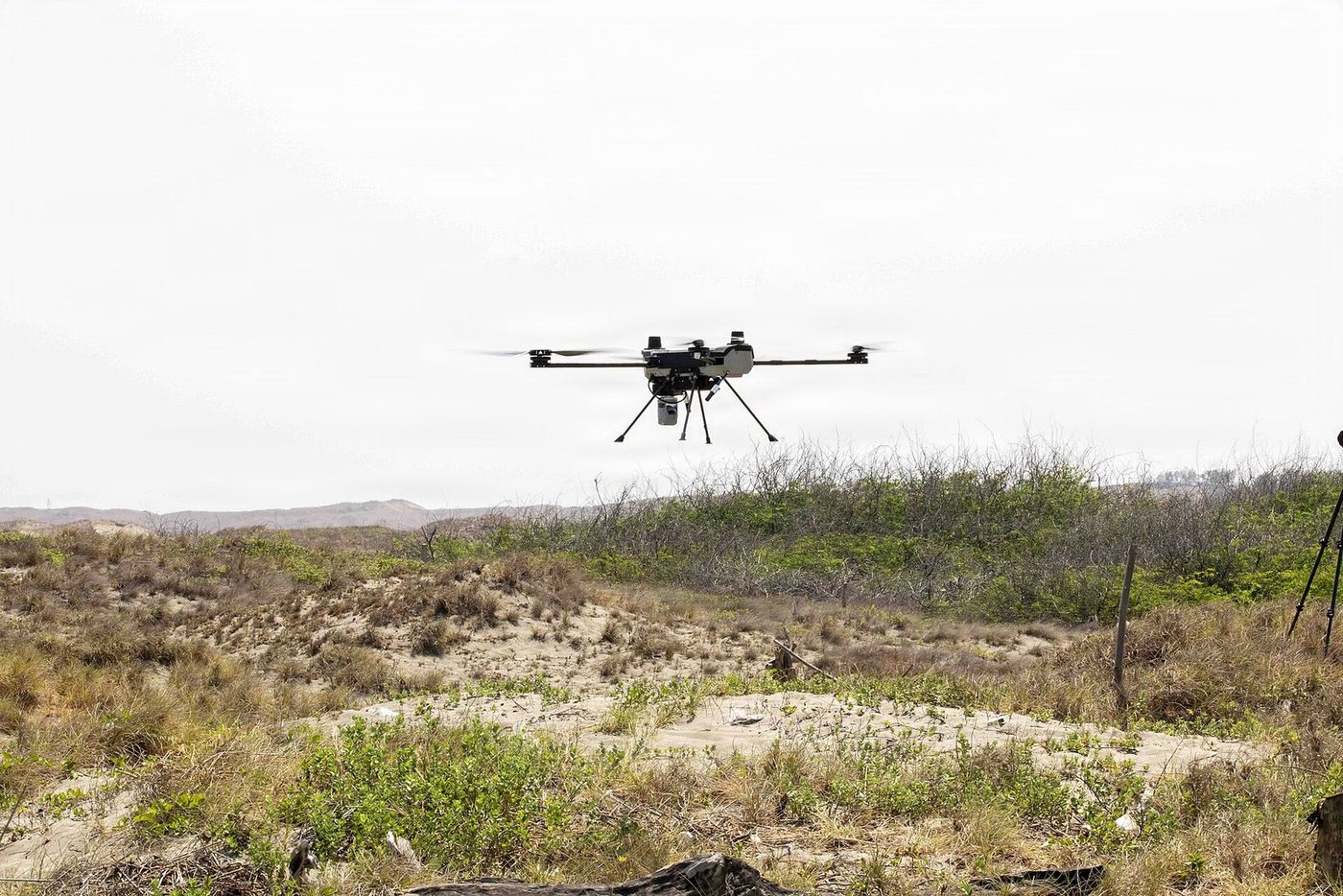
A multicopter holding position over open terrain, working away from any prepared site.

What we build

  • Anti-jam and anti-spoof GNSS integrated into the airframe rather than bolted on — including antenna placement, interference rejection and integrity monitoring that flags a compromised solution instead of using it.
  • Multi-sensor fusion across inertial, visual, barometric, magnetic, ranging and odometric sources, weighted by measured confidence rather than fixed assumption.
  • GNSS-denied navigation holding centimetre-class relative accuracy using alternative references, for operations where satellite positioning is unavailable, unreliable or untrusted.
  • RTK and precise positioning where the application justifies the infrastructure, with a defined answer for what happens when the correction stream stops.

Adaptation to the environment

A positioning stack tuned on an open airfield will disappoint indoors, under canopy, near structures or in the cold. We characterise the environment the system will actually operate in and tune against that — then we test the transitions, because entering and leaving a degraded environment is where most fusion implementations misbehave.

What you get

  • Known, bounded accuracy in the environment you actually fly in
  • Integrity monitoring that reports a bad solution rather than flying on it
  • A defined, tested behaviour for the moment positioning is lost

Related work

Talk to us about your system

The most useful first message describes the constraint you cannot get past.

Start a conversation